
When Your Heart Can’t Breathe, Your Hormones Can’t Heal
by Lori Finlay, MSN, NP, CNS
Week 2 of the Vitality Cycle is about nervous system healing — the missing link between heart health, hormone balance, and true vitality.
If you’ve ever reached the end of a workday feeling wired, exhausted, and strangely breathless — even though you barely moved — your body is telling you something important.
It’s not a motivation issue.
It’s not a willpower problem.
And it’s not that your hormones are “failing.”
It’s that your nervous system hasn’t felt safe enough to exhale.

And during Heart Health Month, this matters more than ever — because heart health is not just about cholesterol or cardio. It’s about how your heart communicates with your brain, your nervous system, and your hormones.
Research shows that heart rhythm patterns and heart rate variability (HRV) are closely tied to autonomic nervous system regulation, emotional processing, and stress resilience.
The Stress Loop Most Women Don’t Realize They’re In
Most women have been taught that stress is something you manage with your mind.
Think positively.
Reframe it.
Push through.
But stress is also — and more importantly — a physiologic rhythm issue.
Your heart and brain are in constant communication through neural, biochemical, and electromagnetic pathways. A significant portion of that communication travels from the heart and body up to the brain via the vagus nerve
So when your heart rhythm becomes hurried, chaotic, or suppressed — which often happens under chronic pressure — your brain receives a very specific message:
Something isn’t safe. Stay alert.
The brain listens.
Cortisol rises.
The sympathetic nervous system stays engaged.
This is the stress loop — and once it’s running, hormones do not get priority.
Screen Apnea: The Stress You’re Not Breathing Through
Here’s where this becomes very real — and very modern.
Many of us unconsciously hold our breath while working.
This pattern has been described as screen apnea or email apnea — not a formal medical diagnosis, but a well-observed breathing behavior where people inhale while anticipating information on a screen and fail to exhale fully.
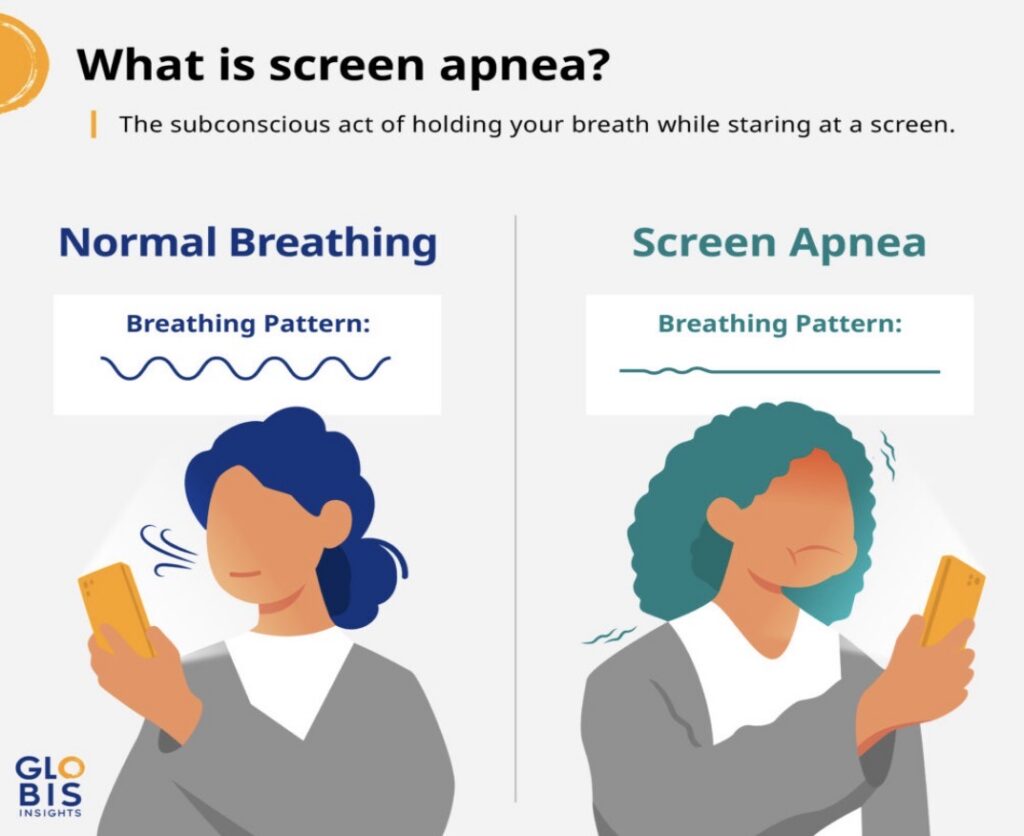
When exhalation is restricted, parasympathetic (rest-and-repair) signaling drops. The nervous system interprets this as threat.
No breath = no safety.
And when safety is absent, hormone balance becomes collateral damage.
What I’ve Learned Using HeartMath at My Desk
This is where I want to share something personal — because data without embodiment doesn’t heal.
I’ve been using my HeartMath device while I work at my desk.
Not during meditation.
Not in perfect conditions.
But right in the middle of emails, writing, thinking, and problem-solving.
What it’s shown me — very clearly — is how often even a seasoned practitioner unconsciously stops breathing when focused.
When I hold my breath, my coherence drops.
When I multitask, my HRV dips.
When I slow my breathing and shift into heart-focused awareness, my coherence rises — sometimes within seconds.
Over time, I’ve watched my baseline HRV improve — not because I tried harder, but because I trained my nervous system to recognize safety during real life, not outside of it.
This is neurofeedback at its best: not judgment, not perfection — just awareness and repetition.
HeartMath’s coherence training and HRV biofeedback have been studied in relation to emotional regulation, autonomic balance, and stress hormone patterns, including cortisol by peer-reviewed psychophysiology research.
Your body learns safety the same way it learned stress — through repetition.
Why Heart–Brain Coherence Changes Hormone Healing
Heart rate variability (HRV) is a measurable indicator of how adaptable your nervous system is. Higher HRV is associated with greater resilience, emotional regulation, and physiologic flexibility.
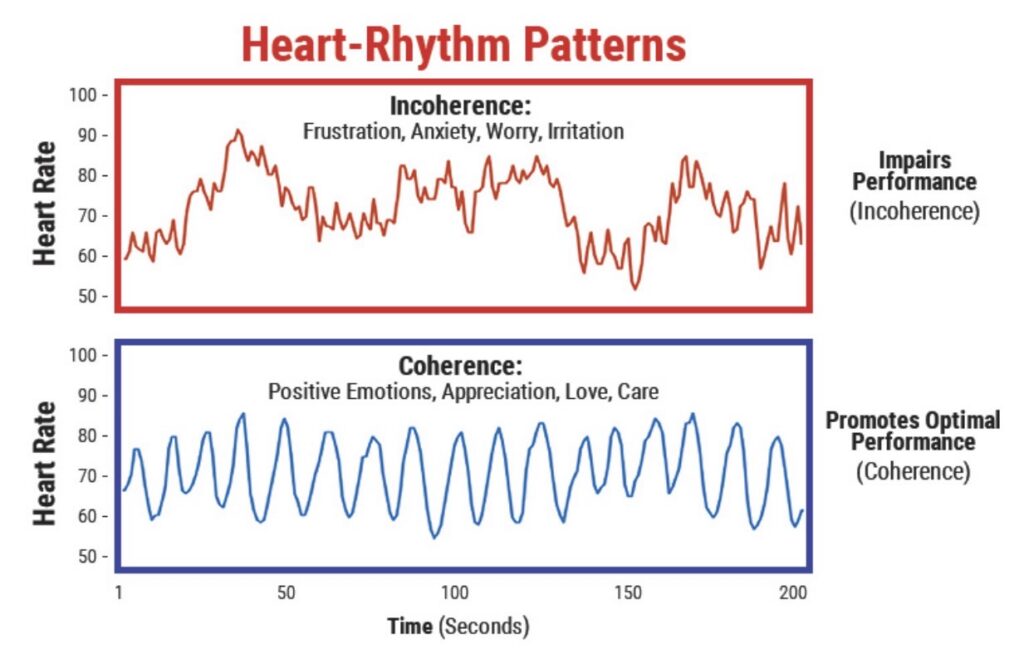
When HRV is low, the body is often stuck in survival mode.
And here’s the key point I want you to hear:
Hormones respond to the nervous system’s perception of safety.
Chronic stress and autonomic imbalance influence:
- Cortisol rhythm
- Progesterone availability
- Thyroid conversion
- Blood sugar regulation
This is why women can have “normal labs” and still feel depleted, anxious, inflamed, or exhausted.
Hormones don’t heal in isolation — you do.
A 90-Second Practice to Interrupt Screen Apnea
You don’t need to stop your day to heal your nervous system.
You need to change the signal inside it.
Try this — especially while working:
- Bring awareness to your heart area
- Inhale slowly for 4–5 seconds
- Exhale slowly for 4–5 seconds
- Evoke a steady feeling — gratitude, compassion, or appreciation

Do this for 60–90 seconds.
You’re not forcing calm.
You’re reminding your body it’s safe enough now.
Why This Matters More Than Ever
If your nervous system is in survival, your hormones will be too.
That’s not a mindset statement.
That’s physiology.
Heart health, nervous system regulation, and hormone balance are not separate conversations — they’re one integrated system.
And healing begins with rhythm, breath, and safety.
Your Week 2 Invitation
This week, don’t start by fixing hormones.
Start by restoring rhythm.
- Notice your breath while you work
- Catch screen apnea when it appears
- Practice heart-focused breathing daily
- Let your body learn safety in real time
If you want support integrating nervous system healing, HRV awareness, and root-cause hormone work, I’d love to walk with you.
→ Learn more or schedule a clarity call at ConsultLori.com