


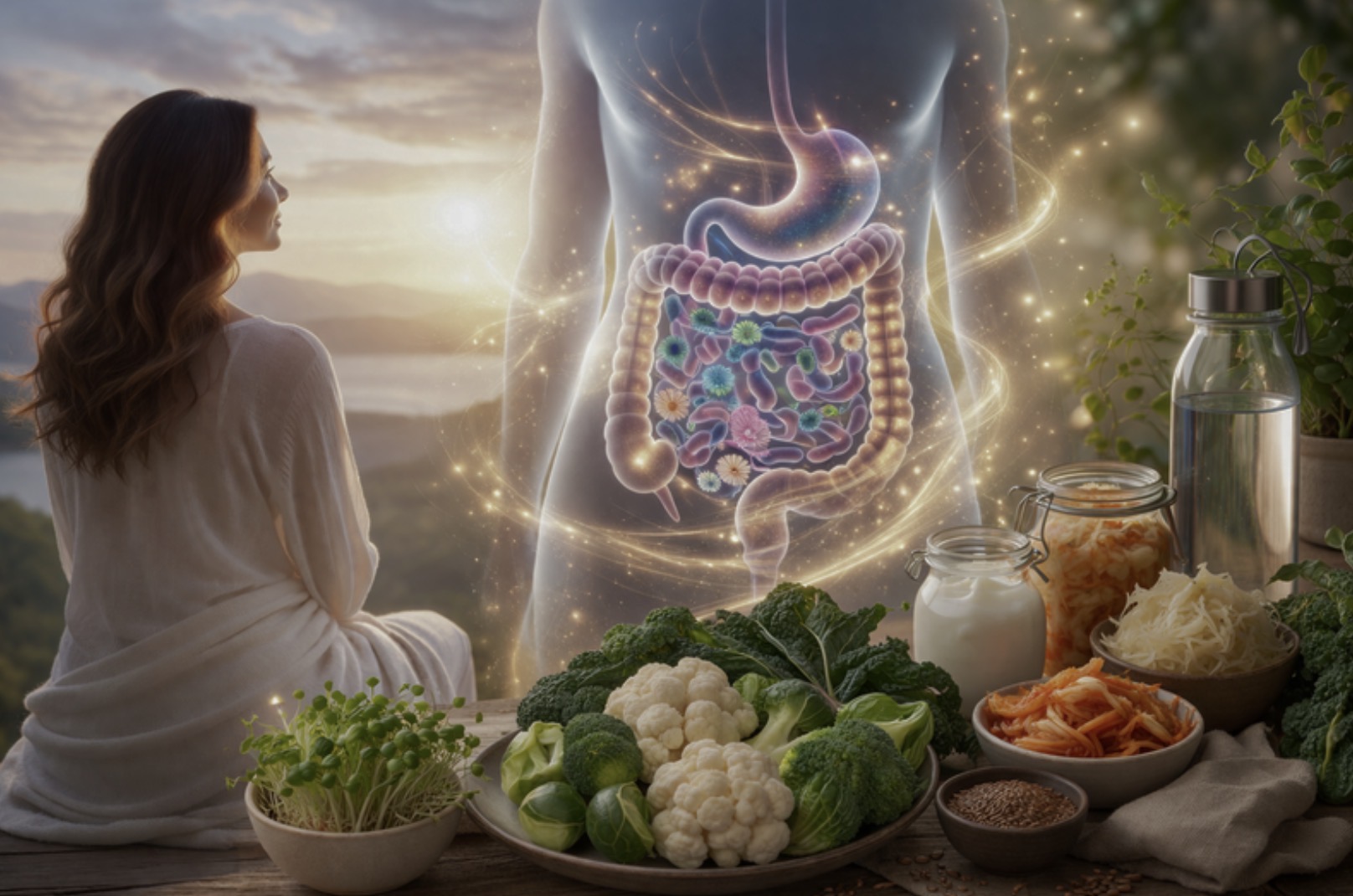
The Gut-Hormone Connection Nobody Is Talking About
Meet Your Estrobolome — and Why It May Be the Missing Piece in Your Hormone Health
I want to introduce you to something that most conventional practitioners have never mentioned — and that may be quietly running the show when it comes to your estrogen levels.
It is called the estrobolome.
And once you understand it, you will never think about gut health — or hormone health — the same way again.
Most women in perimenopause are told that their hormones are off because of age. Because of stress. Because of genetics.
All of those factors matter. But there is something else — something living inside your gut right now — that has a profound and direct influence on how much estrogen is circulating in your body at any given moment.
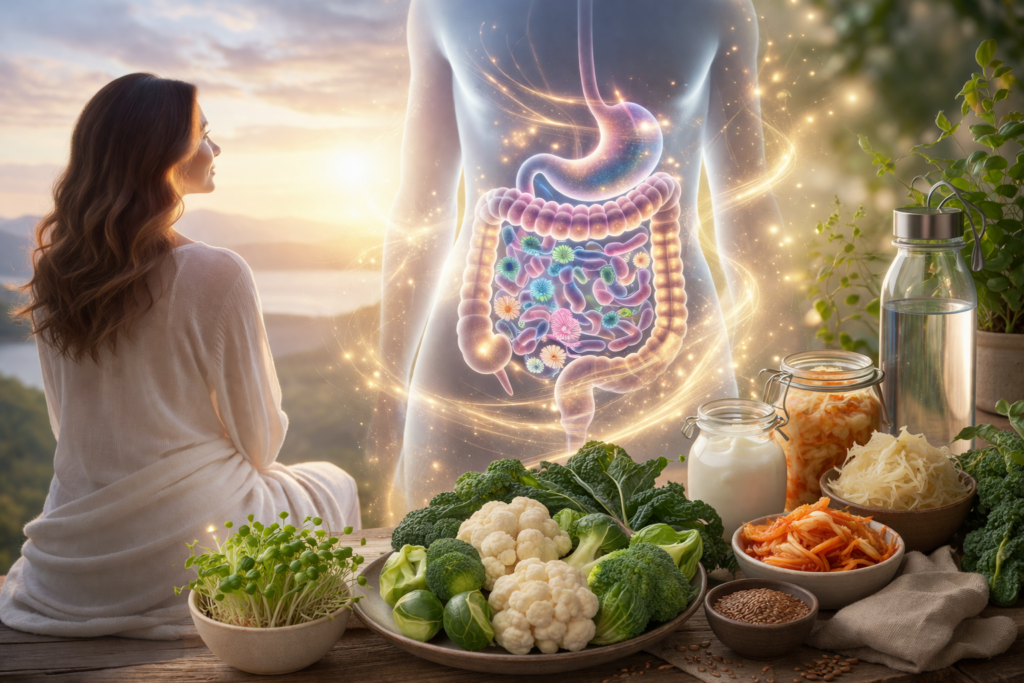
Your gut bacteria are not just managing digestion. They are actively regulating your estrogen. And most women have never been told this.
What Is the Estrobolome?
In a landmark 2011 paper published in Science Translational Medicine, researchers Plottel and Blaser introduced the term estrobolome to describe the collection of gut bacteria — and their genes — that are capable of metabolizing estrogen (1). This was a pivotal moment in our understanding of how the gut and the endocrine system communicate.
Here is how it works in plain English:
Your liver does the hard work of processing used estrogen — packaging it up and sending it to the gut for elimination. That is the healthy pathway. Estrogen gets used, processed, and cleared.
But certain gut bacteria produce an enzyme called beta-glucuronidase (an enzyme that essentially unwraps processed estrogen and releases it back into circulation) (2). When the estrobolome is healthy and balanced, this process is tightly regulated. When it is disrupted — by antibiotics, processed food, chronic stress, or poor sleep — beta-glucuronidase activity increases. Processed estrogen gets reactivated and recirculated rather than cleared.
The result?
Higher circulating estrogen levels. Estrogen dominance. And all the symptoms that come with it — weight gain, breast tenderness, mood swings, heavy periods, brain fog, and more.
Your gut is not just digesting your food. It is determining how much estrogen your body recirculates every single day.
Signs Your Estrobolome May Be Disrupted
You may have never heard of the estrobolome — but your body may have been sending you signals for years. Consider whether you recognize any of these patterns:
- Estrogen dominance symptoms — bloating, breast tenderness, heavy or irregular periods, mood swings
- Weight gain that seems unrelated to diet or exercise — especially around the hips and belly
- PMS or perimenopausal symptoms that feel disproportionate to what your labs show
- A history of antibiotic use — which can significantly alter gut microbiome diversity
- A diet high in processed foods or low in fiber — both of which reduce beneficial gut bacteria
- Chronic stress or poor sleep — which directly disrupts the gut-brain-hormone axis
- Constipation or slow bowel transit — which allows more time for estrogen reabsorption
Research shows that women with disrupted estrobolomes have significantly different estrogen metabolite profiles than women with healthy, diverse gut microbiomes — and that this disruption correlates with increased risk of estrogen-dominant conditions (3).
The Gut-Liver-Hormone Axis: How It All Connects
Understanding the estrobolome requires understanding the relationship between three systems that most of us have been taught to think of separately.
The Liver
Your liver is your primary detoxification organ. It processes estrogen through two phases — Phase I (breaking down estrogen into metabolites, or byproducts that are easier to process) and Phase II (packaging those metabolites through a process called glucuronidation — the liver’s way of making estrogen water-soluble so it can be safely escorted out of the body) (4). When the liver is overburdened — by alcohol, processed food, environmental toxins, or chronic inflammation — these phases slow down and estrogen clearance becomes less efficient.
The Gut
Once packaged estrogen arrives in the gut, the estrobolome takes over. A healthy, diverse microbiome keeps beta-glucuronidase activity low, allowing estrogen to be excreted. A disrupted microbiome allows excessive reactivation and recirculation (1).
The Colon
Bowel transit time matters more than most women realize. Research shows that women who have fewer than one bowel movement per day have measurably higher circulating estrogen levels than those with daily or more frequent elimination (5). Fiber is the key — it binds to estrogen in the gut and escorts it out before it can be reabsorbed.
Liver. Gut. Colon. Three systems. One hormone conversation. And fiber is the thread that ties them all together.
The Xenoestrogen Problem
The estrobolome does not work in isolation. It is also being challenged by something most of us encounter daily without realizing it.
Xenoestrogens — or environmental estrogens — are synthetic compounds that mimic estrogen in the body. They are found in plastics (BPA), personal care products (parabens, phthalates), pesticides (glyphosate, DDT), and food packaging.
Research published in Endocrine Reviews by Vandenberg and colleagues demonstrated a critical and counterintuitive finding: endocrine-disrupting compounds like xenoestrogens can actually be MORE harmful at lower doses — because at low concentrations, they more closely mimic the body’s own hormonal signals and are therefore more likely to bind to hormone receptors undetected (6).
This means the small, daily exposures matter.
The plastic water bottle. The conventional personal care products. The non-organic produce.
These are not alarmist concerns. They are documented endocrine science.
And when xenoestrogens are added on top of a disrupted estrobolome — the total estrogen burden on the body becomes significant.
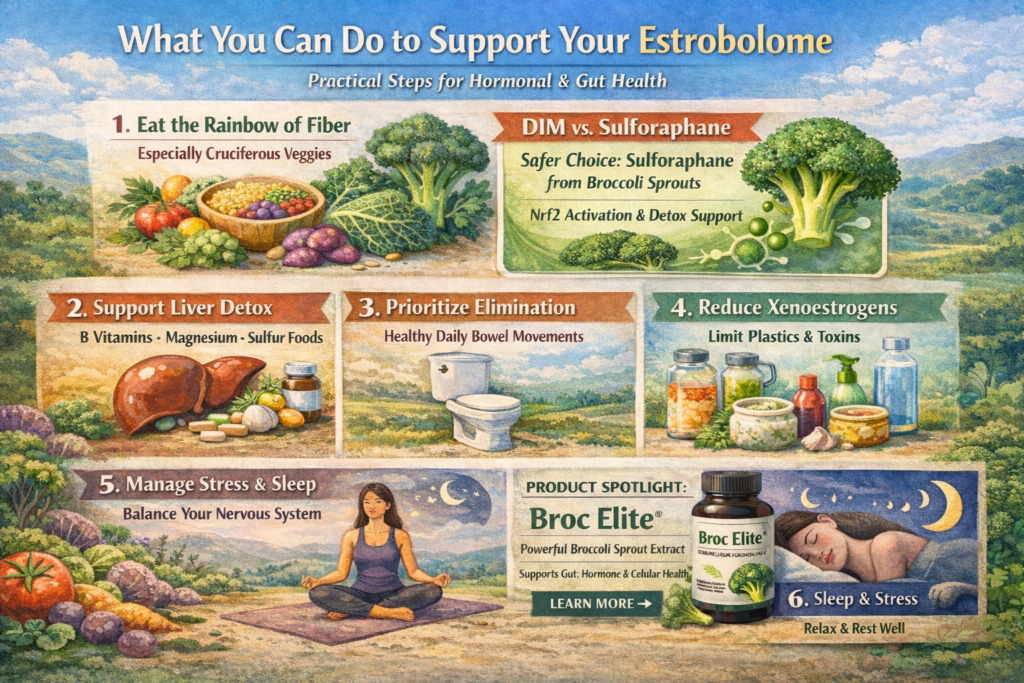
What You Can Do to Support Your Estrobolome
The good news is that the estrobolome is responsive. Unlike your genetics, your gut microbiome can shift — meaningfully — within weeks of consistent dietary and lifestyle changes.
1. Eat the Rainbow of Fiber — Especially Cruciferous Vegetables
Diverse plant fiber feeds diverse gut bacteria. Aim for 25–35g of fiber per day from vegetables, legumes, fruits, flaxseed, and whole grains (7). Cruciferous vegetables — broccoli, cauliflower, Brussels sprouts, kale, and especially broccoli sprouts — deserve special attention here.
A Clinical Note on DIM vs. Sulforaphane
You may have heard of DIM (diindolylmethane — a plant compound derived from cruciferous vegetables that influences estrogen metabolism). DIM has been studied for its ability to shift estrogen metabolism toward less potent estrogen forms, and it can be helpful for some perimenopausal women (8).
However — and this is an important clinical distinction — DIM is not universally appropriate.
For women who are already in menopause and have lower estrogen levels, DIM can further reduce estrogenic activity and worsen symptoms. It requires careful clinical consideration and should not be used without guidance from a knowledgeable practitioner.
The Broader, Safer Recommendation: Sulforaphane
Sulforaphane is a compound found in high concentrations in broccoli sprouts — and it works through a different, and broader, mechanism than DIM. Rather than directly modulating estrogen levels, sulforaphane activates something called the Nrf2 pathway (your body’s master detox and antioxidant switch — think of it as the “on button” for your cells’ own cleaning crew) (9).
Through Nrf2 activation, sulforaphane powerfully supports glutathione production (your body’s master antioxidant and primary detox molecule), Phase II liver detoxification, and cellular protection against oxidative stress (10). This makes it appropriate and beneficial across the hormonal spectrum — for perimenopausal AND menopausal women — without the estrogen-modulating risks of DIM.
Research published in the Proceedings of the National Academy of Sciences found that sulforaphane from broccoli sprout extracts produces rapid, measurable Nrf2 activation and detoxification enzyme induction — effects not achievable through eating mature broccoli alone, since broccoli sprouts contain 10–100 times the sulforaphane concentration of mature broccoli (11).
DIM works on estrogen directly — and requires clinical guidance. Sulforaphane works upstream on detoxification — and is broadly supportive. For most women, sulforaphane is the smarter, safer starting point.
PRODUCT SPOTLIGHT: Broc Elite
My preferred source for a highly bioavailable sulforaphane supplement is Broc Elite — a concentrated broccoli sprout extract that delivers a clinically meaningful dose without requiring you to eat pounds of broccoli daily. It is one of the few products I recommend with confidence for supporting the liver detox and estrobolome health we have discussed in this blog.
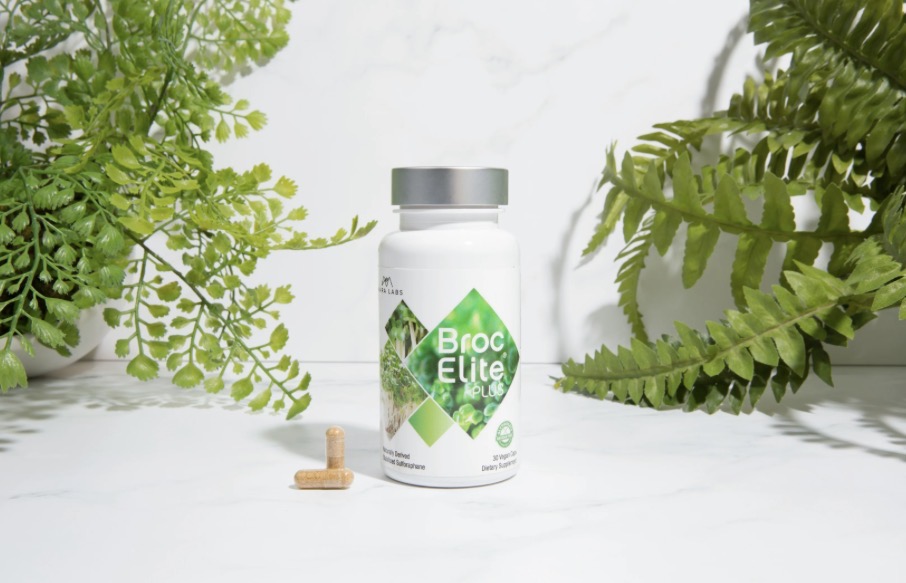
Learn more and order in this LINK! Click HERE.
2. Support Liver Phase II Detoxification
B vitamins — particularly B6, B12, and folate — are essential cofactors for Phase II liver detoxification. Magnesium, sulfur-rich foods (eggs, garlic, onions), and adequate protein support glutathione production — your body’s master antioxidant and detox molecule (4). When these nutrients are depleted, estrogen clearance slows — regardless of how clean your diet otherwise is.
3. Prioritize Daily Elimination
Bowel regularity is non-negotiable for estrogen metabolism. If you are not having at least one complete bowel movement per day, estrogen has more time to be reabsorbed. Hydration (aim for half your body weight in ounces of water daily), fiber, magnesium glycinate (a gentle and highly absorbable form), and post-meal movement all support healthy transit time (5).
4. Reduce Xenoestrogen Exposure
You cannot eliminate all exposure — but meaningful reduction is achievable and impactful. Practical starting points:
- Swap plastic water bottles for glass or stainless steel
- Choose fragrance-free or clean personal care products — the Environmental Working Group’s Skin Deep database is a free, reliable resource
- Prioritize organic for the EWG’s Dirty Dozen produce list
- Avoid heating food in plastic containers
These are not perfectionistic demands. They are practical, evidence-based reductions in your total hormone burden.
5. Protect and Nourish Your Gut Microbiome
Fermented foods — kimchi, sauerkraut, kefir, plain yogurt — introduce beneficial bacteria that support a healthy estrobolome. Prebiotic foods — garlic, onions, leeks, asparagus, oats — feed the bacteria already present (12). Minimize unnecessary antibiotic use, and if antibiotics are required, follow with a targeted probiotic protocol under clinical guidance.
6. Address Stress and Sleep
Chronic stress and poor sleep both disrupt gut microbiome diversity through the gut-brain axis — the bidirectional communication highway between your nervous system and your digestive tract (13). As we explored in previous posts in this Vitality Cycle series, cortisol dysregulation has downstream effects on virtually every system — including the gut bacteria that regulate your estrogen. Nervous system regulation is not separate from hormone health. It is foundational to it.
Montezuma’s Other Revenge
I want to share a personal story that perfectly illustrates everything we have talked about in this blog — because I lived it.
In early 2025, I traveled to Mexico to celebrate my birthday. A week of sunshine, rest, and celebration. Exactly what I needed.
What I did not expect was to come home constipated.
I know — we all assume Mexico means one thing for digestive health. And it was not that.
My twice-daily bowel movements — something I had taken for granted as a reliable sign of a healthy gut — simply stopped. I was more constipated than I had been in years. And the longer it went on, the more I realized something was genuinely wrong.
The more I studied it, the more the picture came into focus.
Certain parasites — ones commonly acquired through travel, food, and water exposure — do not cause the digestive urgency most of us associate with travel illness. Some of them cause the opposite. They slow motility (the rhythmic muscle contractions that move contents through your digestive tract), disrupt the microbiome, and create exactly the kind of sluggish, stagnant gut environment that allows estrogen to be reabsorbed rather than cleared (Banik et al., 2021).
“Montezuma’s revenge” gets all the attention. But constipation from travel parasites is far more common than most people realize — and far more hormonally costly.
What followed was months of focused work. A thorough parasite detox protocol. Multiple colonics to get things moving again. Careful, intentional rebuilding of my gut microbiome from the ground up.
And in the meantime?
My hormone metabolism went down the toilet.
Pun absolutely intended.
Estrogen dominance symptoms I had not experienced in years came roaring back. Breast tenderness. Bloating. Mood shifts. And — much to my frustration — extra pounds that seemed to appear out of nowhere and refused to leave.
Which was especially unwelcome timing.
I was preparing for my wedding.
Not exactly the pre-wedding glow I had envisioned.
It took focused, intentional work to get my estrobolome back on track — fiber, fermented foods, liver support, nervous system regulation, and yes, sulforaphane — and to lose the weight that estrogen dominance had quietly deposited.
I share this not for sympathy.
Is Estrogen Dominance Part of Your Story?
If you have been experiencing symptoms that feel like too much estrogen — bloating, breast tenderness, mood swings, heavy periods, unexplained weight gain — your estrobolome may be part of the conversation.
Understanding where you are is the first step toward knowing what to do next.
FREE GIFT: Take my FREE Hormone Quiz for Estrogen Dominance to find out if your symptoms align with an estrogen-dominant pattern — and get personalized next steps based on your results. Click HERE.
If you are ready to explore this more deeply with personalized support, I would love to connect. Book your FREE 20-minute consultation at ConsultLori.com.
Creating the Vitality You Crave,
Lori Finlay, MSN, NP
Award-Winning Author, Create the Vitality You Crave
*Affiliate Disclosure: I may earn a small commission if you purchase Broc Elite through my link, at no additional cost to you. I only recommend products I trust and that align with the clinical principles I teach and apply in my own health journey.
References
- Plottel, C. S., & Blaser, M. J. (2011). Microbiome and malignancy. Cell Host & Microbe, 10(4), 324–335. https://doi.org/10.1016/j.chom.2011.10.003
- Kwa, M., Plottel, C. S., Blaser, M. J., & Adams, S. (2016). The intestinal microbiome and estrogen receptor-positive female breast cancer. Journal of the National Cancer Institute, 108(8), djw029. https://doi.org/10.1093/jnci/djw029
- Baker, J. M., Al-Nakkash, L., & Herbst-Kralovetz, M. M. (2017). Estrogen-gut microbiome axis: Physiological and clinical implications. Maturitas, 103, 45–53. https://doi.org/10.1016/j.maturitas.2017.06.025
- Hodges, R. E., & Minich, D. M. (2015). Modulation of metabolic detoxification pathways using foods and food-derived components: A scientific review with clinical application. Journal of Nutrition and Metabolism, 2015, 760689. https://doi.org/10.1155/2015/760689
- Goldin, B. R., Adlercreutz, H., Gorbach, S. L., Warram, J. H., Dwyer, J. T., Swenson, L., & Woods, M. N. (1982). Estrogen excretion patterns and plasma levels in vegetarian and omnivorous women. New England Journal of Medicine, 307(25), 1542–1547. https://doi.org/10.1056/NEJM198212163072502
- Vandenberg, L. N., Colborn, T., Hayes, T. B., Heindel, J. J., Jacobs, D. R., Lee, D. H., Shioda, T., Soto, A. M., vom Saal, F. S., Welshons, W. V., Zoeller, R. T., & Myers, J. P. (2012). Hormones and endocrine-disrupting chemicals: Low-dose effects and nonmonotonic dose responses. Endocrine Reviews, 33(3), 378–455. https://doi.org/10.1210/er.2011-1050
- Dahl, W. J., & Stewart, M. L. (2015). Position of the Academy of Nutrition and Dietetics: Health implications of dietary fiber. Journal of the Academy of Nutrition and Dietetics, 115(11), 1861–1870. https://doi.org/10.1016/j.jand.2015.09.003
- Thomson, C. A., Ho, E., & Strom, M. B. (2016). Chemopreventive properties of 3,3′-diindolylmethane in breast cancer: Evidence from experimental and human studies. Nutrition Reviews, 74(7), 432–443. https://doi.org/10.1093/nutrit/nuw010
- Houghton, C. A. (2019). Sulforaphane: Its ‘coming of age’ as a clinically relevant nutraceutical in the prevention and treatment of chronic disease. Oxidative Medicine and Cellular Longevity, 2019, 2716870. https://doi.org/10.1155/2019/2716870
- Dinkova-Kostova, A. T., & Abramov, A. Y. (2015). The emerging role of Nrf2 in mitochondrial function. Free Radical Biology and Medicine, 88(Pt B), 179–188. https://doi.org/10.1016/j.freeradbiomed.2015.04.036
- Fahey, J. W., Zhang, Y., & Talalay, P. (1997). Broccoli sprouts: An exceptionally rich source of inducers of enzymes that protect against chemical carcinogens. Proceedings of the National Academy of Sciences, 94(19), 10367–10372. https://doi.org/10.1073/pnas.94.19.10367
- Hill, C., Guarner, F., Reid, G., Gibson, G. R., Merenstein, D. J., Pot, B., Morelli, L., Canani, R. B., Flint, H. J., Salminen, S., Calder, P. C., & Sanders, M. E. (2014). Expert consensus document: The International Scientific Association for Probiotics and Prebiotics consensus statement on the scope and appropriate use of the term probiotic. Nature Reviews Gastroenterology & Hepatology, 11(8), 506–514. https://doi.org/10.1038/nrgastro.2014.66
- Cryan, J. F., O’Riordan, K. J., Cowan, C. S. M., Sandhu, K. V., Bastiaanssen, T. F. S., Boehme, M., Codagnone, M. G., Cussotto, S., Fulling, C., Golubeva, A. V., Guzzetta, K. E., Jaggar, M., Long-Smith, C. M., Lyte, J. M., Martin, J. A., Molinero-Perez, A., Moloney, G., Morelli, E., Morillas, E., & Dinan, T. G. (2019). The microbiota-gut-brain axis. Physiological Reviews, 99(4), 1877–2013. https://doi.org/10.1152/physrev.00041.2018
- Banik, G. D., & Bhattacharya, A. (2021). Gut microbiota and parasitic infections: A bidirectional relationship. Parasitology Research, 120(12), 3939–3951. https://doi.org/10.1007/s00436-021-07333-8


